

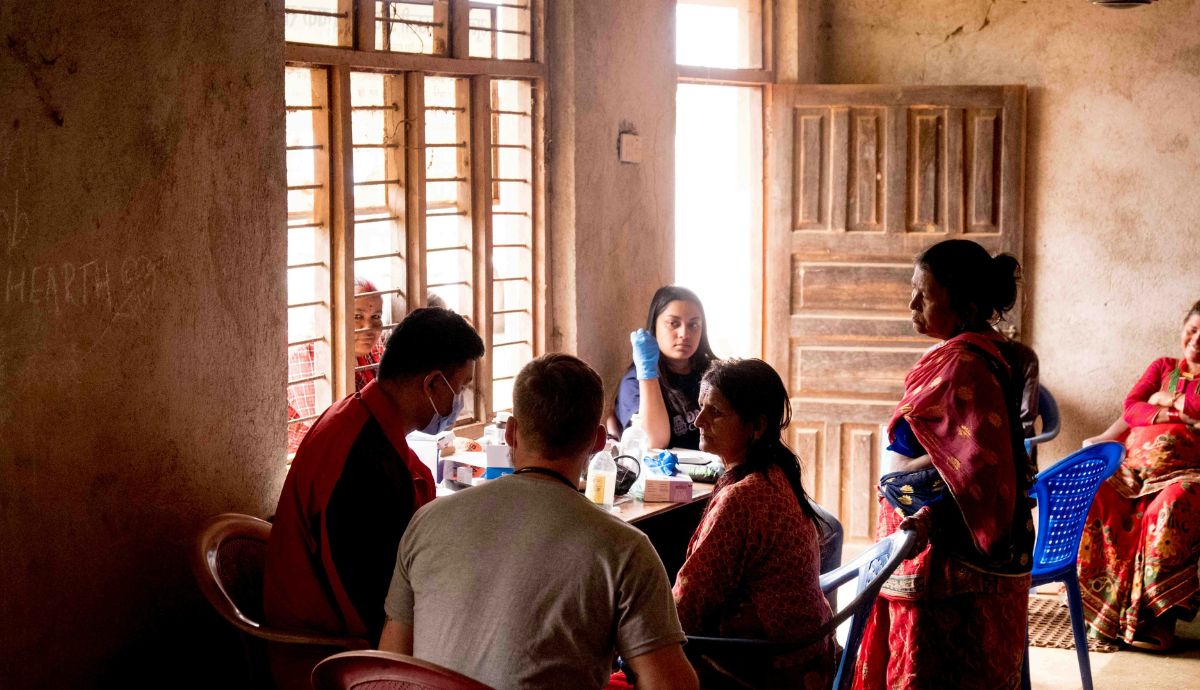
Most global health programmes ask local teams what they think after the design is finished. The order is the problem.
There is a familiar sequence in this work. A programme is designed elsewhere, budgeted elsewhere, and then brought to the place it will operate for validation. A workshop is held. Local staff and community representatives are asked for input on something already approved. Their comments are recorded, a few surface details change, and the programme proceeds roughly as written.
Everyone involved is acting in good faith. That is what makes it durable. Nobody in that room intends to hold a performance of consultation, and yet the timing guarantees one, because the decisions that mattered were made before anyone in the room was asked.
What gets lost
The knowledge that only exists locally is rarely the kind that fits in a validation workshop. It is knowing which clinic the community actually trusts and which one they walk past. It is knowing that the rainy season closes a road for six weeks, that the district pharmacist is the person who really controls stock, that a message in the wrong language from the wrong messenger will land as a threat rather than an offer.
None of that is opinion. It is the operating environment. A programme that learns it in month eight has already spent the budget line that would have accounted for it.
What changing the order looks like
Local partners hold budget, not just activities. Authority is visible in who can move money. A partnership where one side approves every expenditure is a subcontract, whatever the framing agreement says.
The research question is set jointly. Most of the influence in a study is exercised before data collection begins. Institutions that only join at the fieldwork stage inherit someone else’s question and someone else’s definition of a good outcome.
Authorship and attribution follow contribution. The pattern of local researchers appearing in the middle of an author list, or in the acknowledgements, is well documented and easy to correct deliberately.
Something is left behind that outlives the funding. A trained team, a maintained dataset, a strengthened department. Programmes that end cleanly when the grant ends were extractive in structure even when they were generous in intent.
Why this is slower and worth it
Building a programme with partners from the question onward takes longer than designing one and presenting it. It produces fewer projects per funding cycle and more arguments in the first six months. It also produces programmes that survive contact with the place they are meant to serve, which is the only measure that ends up mattering.
The test is simple enough to apply to any project, including your own. If the local partners had said no at the design stage, could they have stopped it? If not, they were not partners. They were an audience.