

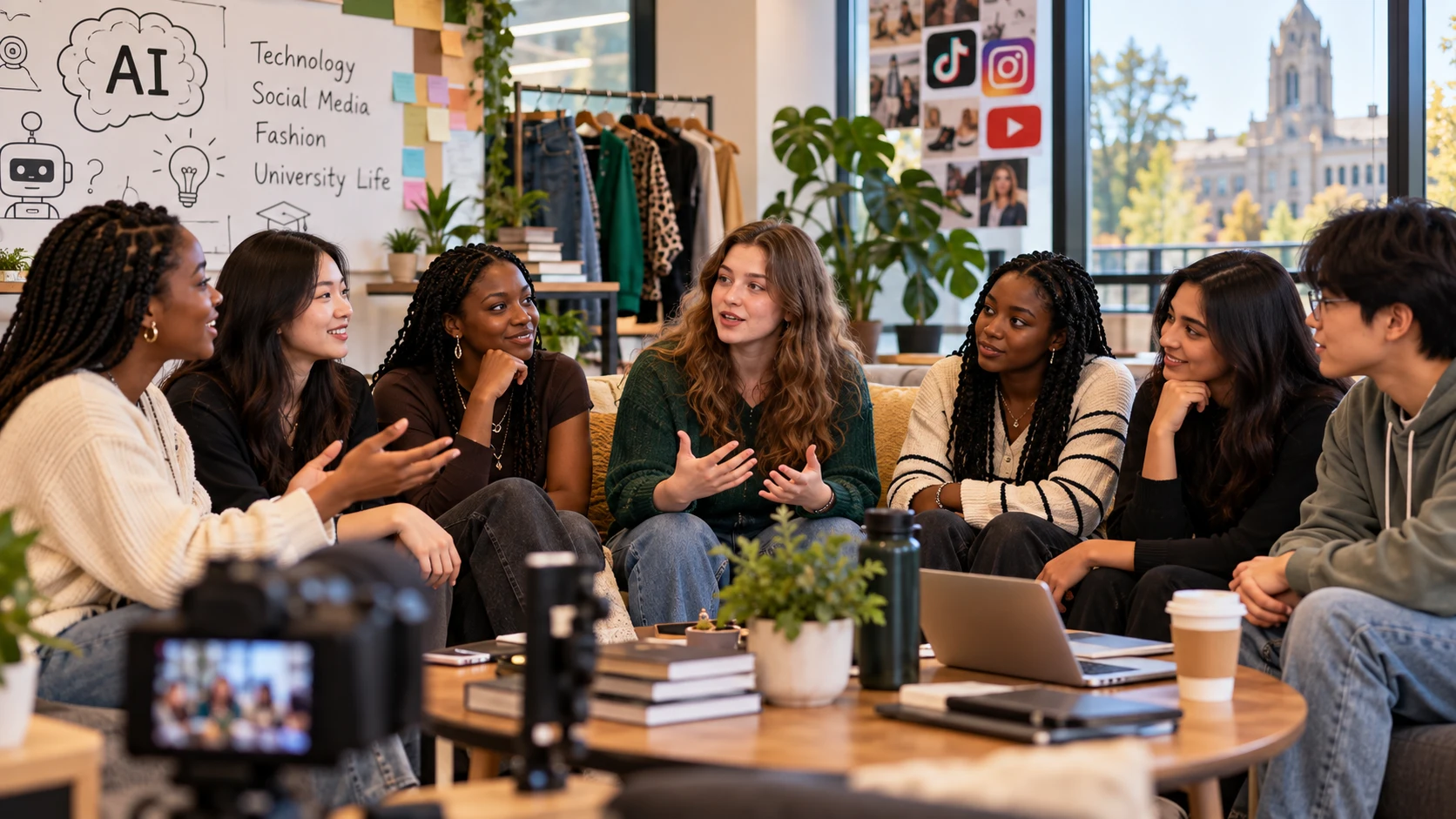
AI, social media, fashion and leaving home — university students discuss the issues shaping their generation.
What happens when you bring university students together, give them the microphone, and let them talk about the issues shaping their lives and their future?
For the first episode of BriJen NextGen, young men and women from different universities came together for a lively conversation about university life, technology, artificial intelligence, social media, fashion and the experience of leaving home for school. The young women began by introducing themselves — their courses, interests and hobbies — before everyone came together to tackle some much bigger questions.
Artificial intelligence quickly became one of the most animated discussions. Rather than simply asking whether AI was good or bad, the students explored how it should be used, whether it needs greater regulation, and how their generation can benefit from it without becoming overly dependent on it.
Phoebe Qin spoke about AI and innovation, emphasizing that AI does not think for us. The individual still has to organize their thoughts, determine what they want to accomplish and give the technology meaningful direction.
Maria Bukirwa raised the importance of rules and regulation. Drawing an analogy with gun accessibility in the United States compared with countries where access is more restricted, she questioned what can happen when something potentially powerful becomes widely available without sufficient safeguards. With AI now so easily accessible, she argued that rules and responsible use need to be part of the conversation.
Hannah Bogach understood the need for safeguards but raised another important question: at what point does regulation begin to interfere with individual rights? She referred to Australia’s restrictions affecting social media access for children under 16 and questioned how far regulation should extend when technology is also part of people’s personal lives.
Ivy Nakitto offered a different perspective. Reflecting on her own experience of being 16 and younger, she understood why younger people might need additional protection. Children and teenagers can be exposed to cyberbullying and other online harms at an age when they may not yet have the maturity to navigate them safely. While discussing fears about AI taking over, Ivy also emphasized that humans remain responsible for creating the structures, education and safeguards that allow AI to be used responsibly.
Ruth Kaptchouang challenged the group to consider whether education alone is enough. People have been educated for years about pollution, emissions and climate change, she pointed out, and world leaders continue to meet to discuss these issues — yet people still pollute the planet. If knowing the risks does not necessarily change behaviour, why should we assume that simply educating people about AI will be enough? What else needs to be done?
Michelle Njenga asked another question facing many young people: Is there a real possibility that AI will replace human jobs, and if so, how should we prepare? She also emphasized educating the generation coming behind them. Schools, professionals and communities could normalize conversations about both the benefits and dangers of AI, using approaches that connect with young people — including music and other creative methods that previous generations may not have considered.
Judy Moon agreed that public education about the benefits and risks of AI is important, while reminding the group that communities use technology differently. Rural and urban communities, for example, may have very different experiences with AI, and those differences need to be considered.
The conversation did not stay serious for long. The students moved from AI to TikTok, phone use, cloning — and whether it was a good or bad idea — before tackling another important question: Which fashion trends deserve a comeback? Michelle gave an enthusiastic yes to bell-bottoms, which she happened to be wearing, but a definite no to the leotards-and-tights combination of the 1980s.
The discussion eventually turned to the experience of leaving home for university. Judy spoke from personal experience, having left Alberta to attend university away from home. The students explored the independence and personal growth that can come with moving away, alongside homesickness, adjustment and the challenge of creating a new support system. They also discussed how young people can better support friends and peers navigating that transition.
Throughout the conversation, the students did not always agree — and that was part of what made the discussion engaging. They questioned one another, challenged assumptions and brought their own experiences into topics that ranged from the future of AI to everyday university life.
Above all, the conversation demonstrated that young people are not simply waiting for the future to happen to them. They are already thinking about the technologies, policies and social changes that will shape their lives — and asking important questions about the role they will play in shaping what comes next.
Watch Episode 1 of BriJen NextGen and join the conversation. What do you think about AI, social media, leaving home for university — and yes, even bell-bottoms?
This conversation is only getting started.
ABOUT THE PANELISTS
Ivy Nakitto
Ivy is a Psychology student at MacEwan University, pursuing a minor in Biology with aspirations of a career in medicine. Alongside her studies, she works part-time as a makeup artist and hairstylist, allowing her to balance her education with her professional interests. Outside of school and work, Ivy enjoys spending time in nature, cooking, and connecting with her faith, friends, and family.
Michelle Njenga
Michelle is a Psychology student at MacEwan University with aspirations of becoming a clinical psychologist. She is passionate about learning and building meaningful connections that encourage personal growth and inspire others.
Ruth Kaptchouang
Ruth is an Accounting major at the University of Alberta, an Events Coordinator for the Black Future Lawyers Club, and an active member of her community both on and off campus. Outside of her academic and community involvement, she enjoys reading, watching documentaries, and volunteering.
Maria Bukirwa
Maria is a third-year Cell Biology student at the University of Alberta, pursuing a minor in Psychology with aspirations of a career in medicine. She is a co-founder and director of Marz Foundation, a Uganda-based nonprofit dedicated to community empowerment, self-sufficiency, and health promotion within underserved communities.
Judy Moon
Judy is a second-year Health Sciences student at Queen’s University with an interest in connecting advocacy, policy, and healthcare. She is a co-founder of a national nonprofit that connects high school students from equity-deserving communities with university mentors and is passionate about expanding opportunities for youth.
Phoebe Qin
Phoebe is a third-year student at the University of Alberta pursuing a Bachelor of Science in Physiology, with aspirations of pursuing a career in medicine, particularly pediatrics. She gained research experience in the Department of Pediatrics at the University of Alberta and enjoys playing intramural sports, cooking, and travelling in her free time.
Brandon Narayan
Brandon is majoring in Finance at the University of Alberta with aspirations of pursuing a career in banking. Outside the classroom, he enjoys getting involved on campus through clubs and case competitions. In his free time, he enjoys playing soccer and golf and connecting with others through sports.
Rodney Fenol
Rodney is a Secondary Education student at the University of Alberta with a passion for working with youth and pursuing a career in education. Alongside his studies, he contributes to university research focused on teacher retention and resilience. Outside of academics, he enjoys spending time outdoors and playing volleyball.
Hanna Bogach
Hanna is a second-year Immunology student at the University of Alberta with a passion for exploring the sciences and expressing her creativity through scientific learning. Outside of her studies, she enjoys reading, playing sports, and video games.
Nukunu Koko-Binder, BSc (Hons)
Nukunu is an Honours Bachelor of Science graduate from the University of Toronto, who is passionate about leadership, mentorship, and creating opportunities for others to grow. He enjoys building meaningful connections and contributing to organizations that value innovation and community impact.
Vicky Nyoike
Vicky is an English for Academic Purposes instructor at the University of Alberta and an English and Communications instructor at NAIT. Her work focuses on developing engaging, student-centred learning experiences that support diverse learners in building their language and communication skills. She is particularly passionate about inclusive teaching and creating culturally responsive learning environments.
Q&A GUESTS
Dr. Kimberly Aldridge, PhD
Dr. Aldridge is a healthcare strategic advisor and mental health advocate with extensive experience in the pharmaceutical industry and healthcare innovation. She is passionate about improving mental health outcomes in Black communities, supporting caregivers, and advancing health equity.
Dr. Wesner Junior Jacotin, MD
Dr. Jacotin is an emergency physician and Chief Flight Physician at Haiti Air Ambulance, specializing in emergency care and intensive care. His work includes providing critical medical care in both hospital and pre-hospital settings, managing complex emergencies, and supporting the stabilization and transport of critically ill or injured patients.