
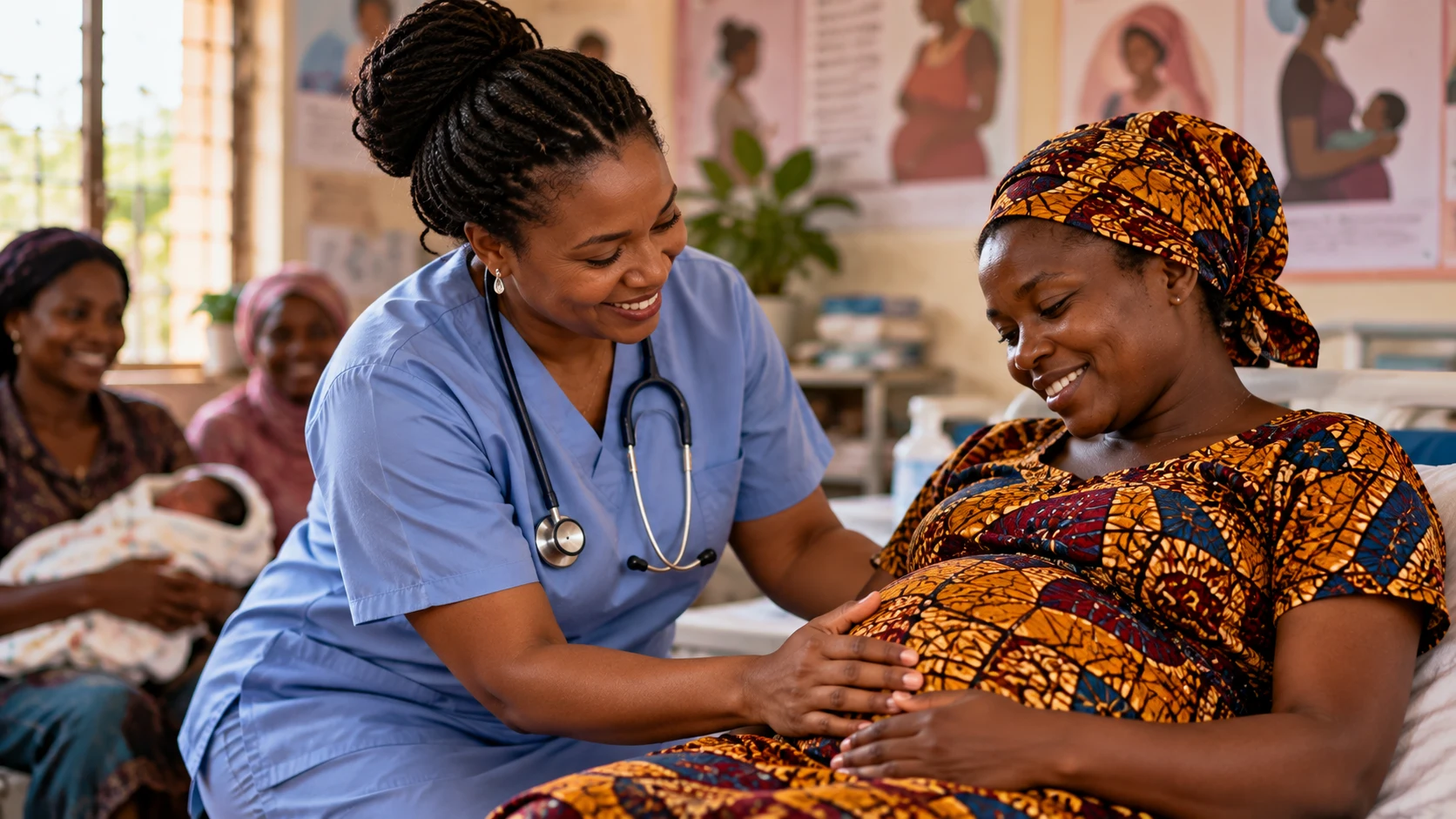
When people hear the word midwife, they may picture someone assisting during labour and delivery.
But midwifery is much more than support at birth. It is a model of care built around trust, continuity, informed choice, cultural safety, and strong relationships with women, families, and communities.
The World Health Organization describes midwifery as skilled, knowledgeable, and compassionate care provided throughout pre-pregnancy, pregnancy, birth, the postpartum period, and the early weeks of a newborn’s life (World Health Organization [WHO], n.d.).
This distinction matters because care delivered by a midwife does not necessarily mean that the full midwifery model of care is being practiced. A healthcare system may employ midwives while still organizing services around short appointments, hospital routines, and the moment of delivery.
A true midwifery model provides coordinated, person-centred care across pregnancy, childbirth, and the postnatal period. Midwives work within broader healthcare teams and connect women with obstetricians, physicians, nurses, community health workers, and other specialists when complications arise (WHO, 2024).
The discussion also highlighted an important principle: communities know what they need.
In Uganda, Namibia, Canada, and other parts of the world, healthcare providers such as midwives may work alongside traditional or Indigenous midwives and community health workers. Perhaps these providers together create a more community-centred system that can respond to local barriers such as cost, transportation, trauma, and mistrust of healthcare facilities.
It has been suggested in various parts of the world that one way of integrating traditional healers into the formal healthcare system is to equip them with basic protective equipment, such as gloves, masks, and provide the training in first aid practices.
Doulas can also be part of this network, but they have different responsibilities from midwives. A doula generally provides non-clinical emotional, physical, and informational support. A midwife is a trained healthcare professional who provides clinical maternity care, monitors the mother and baby, manages uncomplicated births, and recognizes when specialized intervention is required.
Investing in midwifery can have a significant global impact. The State of the World’s Midwifery 2021 identified a global shortage of approximately 900,000 midwives and called for greater investment in the profession (United Nations Population Fund [UNFPA], 2021).
Midwifery should not be viewed as an additional service beside the healthcare system. It should be recognized as a complete, community-centred model of care.
All women deserve access to midwifery care, and every midwife deserves to feel supported while providing it.
Look out for the next episode as we begin exploring the challenges and barriers that pregnant women face in accessing maternal care.
References
United Nations Population Fund. (2021). The State of the World’s Midwifery 2021.
https://www.unfpa.org/publications/sowmy-2021
World Health Organization. (2024). Transitioning to midwifery models of care: Global position paper.
https://www.who.int/publications/i/item/9789240098268
World Health Organization. (n.d.). Midwifery education and care.
https://www.who.int/teams/maternal-newborn-child-adolescent-health-and-ageing/maternal-health/midwifery
ABOUT THE GUESTS
Diane Lockhart, RM
Diane is a registered nurse and midwife, founder of the Amani Family Centre in Uganda, and a community-based consultant midwife and trainer. Her work focuses on providing safe, compassionate, and accessible maternity care, particularly for mothers in underserved communities.
Dr. Hilde Nashandi, RN, RM, MPH, PhD
Dr. Hilde is a senior midwife and lecturer at the University of Namibia, where she teaches Midwifery Science and Public Health. She earned her PhD in Health Sciences in 2024 through North-West University and the University of Namibia, combining her expertise in education and maternal healthcare to support improved outcomes for mothers and newborns.
Gloria Letendre, NP
Gloria is a First Nations Nurse Practitioner and Health Director at Tallcree First Nation in Alberta, with over 30 years of experience serving First Nations and Métis communities. Her expertise in primary care and Indigenous health includes supporting COVID-19 response efforts in remote communities and addressing the broader factors affecting community health.
Dr. Rachel Zaslow, CM, PhD, CD
Dr. Zaslow is a registered midwife with 25 years of experience in maternal healthcare across sub-Saharan Africa. She serves as Executive Director of Mother Health International and clinical faculty at Yale School of Midwifery, specializing in culturally responsive midwifery care, strengthening maternal health systems, developing birth centres, and training midwives in underserved communities.
Kendra Folh, DNP, RNC-OB, C-ONQS, CPHQ, CLSSBB
Kendra is a Service Line Director specializing in Women’s and Children’s Health in Texas. Through her strategic leadership and focus on healthcare innovation, she supports the advancement of women’s and pediatric healthcare. Her work emphasizes patient safety, personalized care, and continuous improvement in the quality and delivery of healthcare services.